

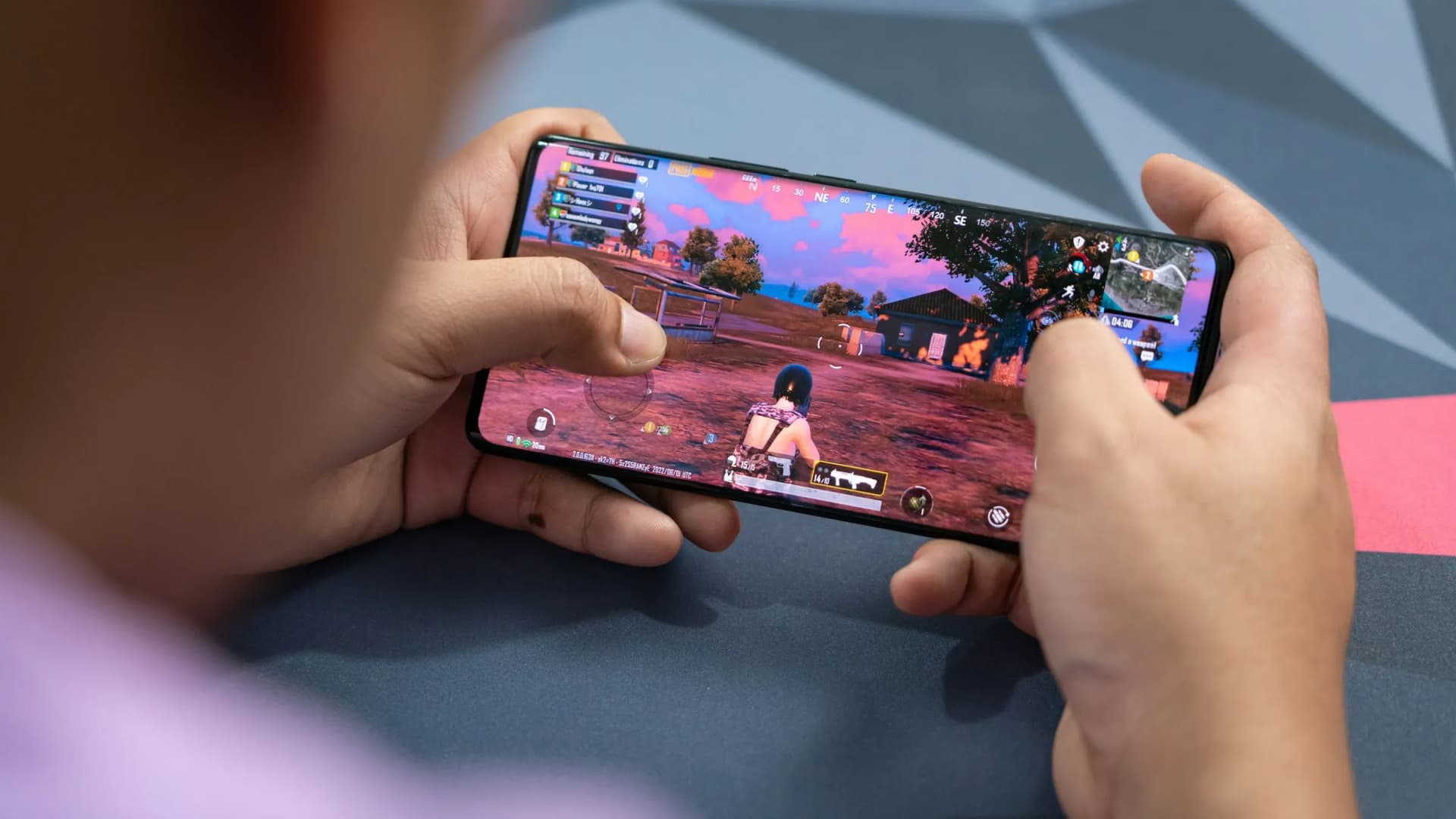
Gaming Phone Price in Nepal at a Glance
Phone | Variant | Price | Quick Link | Chipset | Battery | Cooling System |
Best Gaming Phones Under Rs. 20,000 | ||||||
Realme Note 70 | 4/64GB | Rs. 16,999 | Unisoc T7250 (12nm) | 6,300 mAh, 15W | Passive cooling | |
Honor Play 10 | 3/64GB | Rs. 20,999 | Helio G81 (12nm) | 5,000 mAh, 10W | Passive cooling | |
Best Gaming Phones Between Rs. 20,000 and Rs. 30,000 | ||||||
Samsung Galaxy A07 | 4/64GB | Rs. 25,499 | Helio G99 (6nm) | 5,000 mAh, 25W | Passive cooling | |
ZTE Nubia V80 Design | 8/128GB | Rs. 29,999 | Unisoc T7280 (12nm) | 5,000 mAh, 22.5W | Passive cooling | |
Honor X6d | 4/128GB | Rs. 29,999 | Dimensity 6300 (6nm) | 5,260 mAh, 15W | Passive cooling | |
Best Gaming Phones Between Rs. 30,000 and Rs. 50,000 | ||||||
Infinix Note Edge | 6/128GB | Rs. 41,999 | Dimensity 7100 (6nm) | 6,500 mAh, 45W | Passive cooling | |
Nothing Phone (3a) Lite | 8/128GB | Rs. 43,999 | Dimensity 7300 Pro (4nm) | 5,000 mAh, 33W | Passive cooling | |
Realme P3 | 8/256GB | Rs. 44,999 | Snapdragon 6 Gen 4 (4nm) | 6,000 mAh, 45W | 6,050 mm² AeroSpace Vapor Chamber | |
Best Gaming Phones Between Rs. 50,000 and Rs. 70,000 | ||||||
OnePlus Nord CE5 | 8/256GB | Rs. 59,999 | Dimensity 8350 Apex (4nm) | 7,100 mAh, 80W | 7,041 mm² CryoVelocity Vapor Chamber | |
Realme P3 Ultra | 12/256GB | Rs. 65,999 | Dimensity 8350 Ultra (4nm) | 6,000 mAh, 80W | 6,050 mm² AeroSpace Vapor Chamber | |
Infinix GT 30 Pro | 8/256GB | Rs. 65,999 | Dimensity 8350 Ultimate (4nm) | 5,500 mAh, 45W | 3D Vapor Chamber system | |
Best Gaming Phones Between Rs. 70,000 and Rs. 1 Lakh | ||||||
Infinix GT 50 Pro | 12/256GB | Rs. 84,999 | Dimensity 8400 Ultimate (4nm) | 6,500 mAh, 45W | 7,700 mm² Vapor Chamber, + Liquid Cooling | |
POCO X8 Pro Max | 12/256GB | Rs. 94,999 | Dimensity 9500s (3nm) | 8,500 mAh, 100W | 3D IceLoop 5,800 mm² Vapor Chamber | |
OnePlus 15R | 12/256GB | Rs. 98,499 | Snapdragon 8 Gen 5 (3nm) | 7,400 mAh, 80W | 5,704 mm² CryoVelocity 3D Vapor Chamber | |
Best Flagship Gaming Phones | ||||||
RedMagic 11 Pro | 16/512GB | Rs. 164,999 | Snapdragon 8 Elite Gen 5 (3nm) | 7,500 mAh, 80W | 13,116 mm² Vapor Chamber + Liquid Cooling + Turbo fan | |
OnePlus 15 | 16/512GB | Rs. 169,999 | Snapdragon 8 Elite Gen 5 (3nm) | 7,300 mAh, 120W | 5,731 mm² CryoVelocity 3D Vapor Chamber | |
iPhone 1 Pro Max | 12/256GB | Rs. 279,900 | Apple A20 Pro (2nm) | 5,391 mAh, 40W | Next-gen Vapor Chamber | |
Note: All prices listed below are official and include 13% VAT. But do note that smartphone prices and stock can change frequently, so we advise you to recheck the price before buying.
How We Select and Rank Gaming Phones
Factors We Consider
Before we evaluate the gaming performance of each phone, we assess things like chipset, GPU, RAM, storage speed, refresh rate, touch response, cooling system, and more. Then, we looked into whether each game supports the phone’s advertised frame rate. For example, a phone with a 120Hz display doesn’t automatically mean it can render a game at 120 FPS.
Here’s a brief overview of the factors we prioritize when we compare gaming phones:
● Processor — First and foremost, we examined the chipset (including its CPU, GPU hardware, RAM, storage capacity) since they have the biggest influence on the phone’s gaming performance.
● Cooling design — A powerful chipset is essentially meaningless if the phone’s cooling design isn’t effective enough to keep the temperature in check. While affordable, budget phones solely rely on passive cooling, most high-end phones even feature a more advanced vapor chamber cooling system, liquid cooling, and more.
● Sustained performance —We also paid close attention to whether the phone’s gaming performance remains consistent after extended gaming sessions. Every phone can hit its peak performance for a minute or two, but what matters more is how it performs after at least 30 minutes.
● Display — For this, we considered the phone’s refresh rate, resolution, brightness, and how quickly the screen responds to touch for the best gaming experience.
● Battery and charging — We also looked into the battery capacity of each phone and its ability to recharge conveniently between gaming sessions. Similarly, phones with “bypass charging” are particularly important when it comes to gaming.
● Software support — For a seamless gaming experience, we realize that a phone with a game dashboard that lets us control performance, notifications, touch response, and recording without interrupting play is quite helpful. Likewise, we also studied things like background-app management and update commitment for each phone.
● Comfort — We also factored in comfort before deciding on our top picks. A phone that is awkward to hold in landscape mode, excessively heavy, or generally uncomfortable to use for long periods wasn’t necessarily our preferred recommendation even if its performance was excellent.
Real-World Testing vs Specification-Based Recommendations
Let us be blunt here. We don’t blindly trust a phone’s spec sheet, and neither should you. As we mentioned before, a phone with a 120Hz display doesn’t automatically run games like PUBG Mobile, Genshin Impact, or Call of Duty at 120 FPS. Most budget phones simply don’t have the raw horsepower to play high FPS as well.
Whereas a phone with a big AnTuTu score tells us nothing about how a phone handles a 30-minute Genshin session during July heat. So we distinguish verified game performance from manufacturer claims to see whether the frame rate stays steady, whether the back of the phone becomes uncomfortable to hold, whether the touch response feels laggy in a gunfight, and how much battery is left after long gaming sessions.
How We Verify Gaming Phone Prices in Nepal
Since smartphone prices in Nepal are constantly changing these days, we verify each figure before publishing. We have mostly kept the phones in the budget groups specified for this guide, although there might be a few exceptions here and there.
Another thing to keep in mind is that promotional discounts, seasonal offers, exchange deals, and EMI schemes can change their effective cost as well. More importantly, at GBN Store, you will only find 100% genuine, officially imported smartphones so that you can rest assured about things like warranty and after-sales service.
Best Gaming Phones in Nepal by Price Range
Best Gaming Phones Under Rs. 20,000
Realme Note 70
Price: Rs. 16,999
Variant: 4GB RAM, 64GB storage
Specification | Details |
Display | 6.74” HD+ IPS panel, 90Hz refresh rate, 563 nits brightness |
Processor | Unisoc T7250 (12nm) |
RAM / Storage | 4/6GB RAM, 64/128GB storage |
Rear Camera | 13MP f/2.2 |
Front Camera | 5MP f/2.2 |
Battery and Charging | 6,300 mAh with 15W charging |
Network | 4G LTE |
Software | Realme UI 5.0 on top of Android 15 |
Okay, the Realme Note 70 is the most affordable phone on our list, and at Rs. 16,999, it’s the cheapest way into mobile gaming in Nepal right now. It runs on a modest Unisoc T7250 chip, which certainly isn’t suited to handle demanding 3D titles at high settings, but you will be able to enjoy games like Call of Duty, Mobile Legends, and Asphalt Legends on low graphical settings.
For day-to-day use, Realme Note 70’s 90Hz display makes scrolling through menus feel quite smooth as well. And where this phone makes a stronger case is in terms of battery endurance. Its 6,300 mAh battery consistently lasted a day and a half with regular gaming sessions in the mix. We also love its durability story: MIL-STD-810H certification and IP54 dust/splash resistance mean the Realme Note 70 will survive most kinds of abuse a budget phone typically endures. Its 15W charging speed is quite slow, but overall, this is a nice, durable everyday phone with casual gaming potential.
Pros:
● The most affordable playable gaming phone in Nepal right now
● Enormous 6,300 mAh battery
● Smooth 90Hz display with responsive touch
● Military-grade durability + IP54 rating
● Loud speaker, great for gaming without earphones
Cons:
● Unisoc T7250 limits you to light gaming only
● 15W charging takes a long time to fill that big battery
● Only 4GB RAM on the base model
Check price: Realme Note 70
Honor Play 10
Price: Rs. 20,999
Variant: 3GB RAM, 64GB storage
Specification | Details |
Display | 6.74” HD+ TFT panel, 90Hz refresh rate |
Processor | MediaTek Helio G81 (12nm) |
RAM / Storage | 3/4GB RAM, 64/128GB storage |
Rear Camera | 13MP f/2.2 |
Front Camera | 5MP f/2.2 |
Battery and Charging | 5,000 mAh with 10W charging |
Network | 4G LTE |
Software | Android 15 (Go Edition) |
The Honor Play 10 does go above our budget a little since its base 3/64GB model costs Rs. 20,999 in Nepal right now. It runs on Android Go, and it’s powered by the Helio G81 chip, which is similar to the Unisoc T7250 in terms of raw performance, although this MediaTek chip has better game optimizations overall.
Of course, this is yet another budget phone, so don’t expect it to run high-end games smoothly or anything. But in our testing, light games like Subway Surfers, Clash Royale, Free Fire, and even Mobile Legends ran on low settings without much trouble. PUBG Mobile is perfectly playable at the lowest graphics preset too, even though you will see occasional stutters in hot drops with lots of players on screen.
Moving on, the 5,000 mAh battery inside the Honor Play 10 comfortably lasts a full day of mixed use. And because the chip isn’t powerful, it barely gets warm—there’s genuinely nothing to throttle. Honor has also kept the 3.5mm headphone jack alive here, which budget gamers relying on wired earphones or IEMs for tracking the footsteps of their enemies will love. But there are a few things you need to know about this phone. First things first, its 10W charging is painfully slow. And the base 3GB RAM variant multitasks poorly too.
Pros:
● Cool, consistent performance with zero throttling
● 3.5mm headphone jack and microSD expansion up to 1TB
● 90Hz display for a smoother experience
● Lightweight Android Go software
Cons:
● 3GB RAM makes multitasking and app switching painful
● Only 10W charging speed
● Current price exceeds the Rs. 20,000 ceiling
Check price: Honor Play 10
Check Other Honor Phones: https://gbnstore.com/category/smartphones/honor
Best Gaming Phones Between Rs. 20,000 and Rs. 30,000
Samsung Galaxy A07
Price: Rs. 25,499
Variant: 4GB RAM, 64GB storage
Specification | Details |
Display | 6.7” HD+ IPS panel, 90Hz refresh rate |
Processor | MediaTek Helio G99 (6nm) |
RAM / Storage | 4/6GB RAM, 64/128GB storage |
Rear Camera | 50MP f/1.8 main + 2MP depth |
Front Camera | 8MP f/2.0 |
Battery and Charging | 5,000 mAh with 25W charging |
Network | 4G LTE |
Software | One UI 8 on top of Android 15 |
Samsung Galaxy A07 is the phone I recommend to people who walk into a store saying, "I just want a Samsung". And to be fair, Samsung has earned that trust—the Galaxy A07 comes with an almost unheard-of software commitment at this price: 6 generations of Android updates. Which means this phone will stay current until Android 21. That said, just because a phone has long software support doesn’t mean its gaming performance will improve over the years.
Whereas the Helio G99 chip inside is a proven budget gaming chip. In our tests, everything from Free Fire, Mobile Legends, and Call of Duty Mobile ran smoothly, and PUBG was playable at balanced settings too. Its 6.7-inch 90Hz LCD offers a reasonably smooth experience for its category, and the 5,000 mAh battery is useful when we spend time switching between gaming and everyday apps.
But there is one caveat, though. If there is some wiggle room in your budget, we would highly suggest spending a couple thousand rupees more on its 6GB RAM variant if you’re buying it for gaming. On the base model with 4GB memory, we ran into app reloads and occasional stutters in games when background apps piled up. But as a reliable, long-supported daily driver that games well enough, the Galaxy A07 is an easy recommendation. Particularly for buyers who prioritize brand value and service center availability across Nepal.
Pros:
● Helio G99 punches above its class
● Six years of Android updates (up to Android 21)
● Polished One UI software and wide service network in Nepal
● IP54 dust/splash resistance and 25W charging
Cons:
● No dedicated gaming-focused cooling system
● Not much performance headroom in the base variant with 4GB RAM
● Single speaker, average HD+ display
Check price: Samsung Galaxy A07
Check Other Samsung Phones: https://gbnstore.com/category/smartphones/samsung
ZTE Nubia V80 Design
Price: Rs. 29,999
Variant: 8GB RAM, 128GB storage
Specification | Details |
Display | 6.75” HD+ IPS panel, 120Hz refresh rate, 1,000 nits brightness |
Processor | Unisoc T7280 (12nm) |
RAM / Storage | 8GB RAM, 128/256GB storage |
Rear Camera | 50MP f/1.8 |
Front Camera | 16MP |
Battery and Charging | 5,000 mAh with 22.5W charging |
Network | 4G LTE, 5G |
Software | MyOS 16 on top of Android 16 |
The Nubia V80 Design is the prettiest phone in this segment, and frankly, the least gaming-focused of the three as well. On paper, its 8GB of RAM and a 120Hz display under Rs. 30,000 actually look like a steal. Especially for light gaming. Less graphically demanding games like Subway Surfers, Mobile Legends, and Free Fire run well, and its display with a clean hole-punch cutout makes games look far better than they have any right to at this price.
Besides casual games, its Unisoc T7280 chip is well-suited for daily tasks too. While the 8GB RAM configuration offers much better headroom for everyday multitasking. And even though ZTE’s clean, close-to-stock Android software itself is a treat to use, we would’ve definitely loved to see some sort of commitment to future software updates.
What we really enjoyed about the Nubia V80 Design is everything around its gaming aspect. That iPhone-inspired design is a definite head turner; it also has a bright 1,000 nits display, while its IP64 rating and a 3.5mm headphone jack round out the overall smartphone experience. So all in all, the ZTE Nubia V80 Design is a good option for casual gamers who want their phone to look and feel more expensive than it is.
Pros:
● 8GB RAM at Rs. 29,999—best multitasking in the segment
● 120Hz display, attractive iPhone-like design
● Clean, near-stock MyOS 16 with useful AI features
● A bright IPS display with a hole-punch cutout for a clean look
Cons:
● Unisoc T7280 is not a high-performance gaming chipset
● No storage expansion
● Its 120Hz display is underutilized by the weak GPU
Check price: ZTE Nubia V80 Design
Check Other ZTE Phones: https://gbnstore.com/category/smartphones/zte
Honor X6d
Price: Rs. 29,999
Variant: 4GB RAM, 128GB storage
Specification | Details |
Display | 6.75” HD+ TFT panel, 90Hz refresh rate, 450 nits brightness |
Processor | MediaTek Dimensity 6300 (6nm) |
RAM / Storage | 4/8GB RAM, 128/256GB storage |
Rear Camera | 50MP f/1.8 |
Front Camera | 5MP f/2.2 |
Battery and Charging | 5,260 mAh with 15W charging |
Network | 4G LTE, 5G |
Software | MagicOS 10 on top of Android 16 |
Honor X6d is one of the more interesting gaming phones in this price range because it combines an affordable price with a powerful MediaTek Dimensity 6300 chipset. It’s also 5G-capable, making it one of the cheapest 5G phones in Nepal. Anyway, the Honor X6d is perfectly suited to handle casual and moderately demanding games better than most other phones built around entry-level processors in this price segment.
For starters, this is among the few phones alongside the Galaxy A07 that let you comfortably play PUBG Mobile with a smooth 60 FPS. Similarly, other games like Call of Duty, Free Fire, and Mobile Legends run effortlessly at medium settings—and the gameplay itself felt quite responsive in our testing. Even the thermals on the Honor X6d were better than expected! So for a phone under Rs. 30,000, we can say this is about as good as gaming gets in 2026.
And while its 5,260 mAh battery got us through a day of gaming and social media without any battery anxiety, its 15W charging means you’ll be waiting for a while when the phone eventually runs out of juice. Also, its 6.75” 90Hz display is fine indoors, but its 450-nit brightness is far from ideal for playing outdoors on a sunny day. Our biggest concern, however, is its limited 4GB RAM. Still, as a pure “60 FPS PUBG machine with 5G”, the Honor X6d delivers on its promises.
Pros:
● The most powerful gaming phone under Rs. 30,000 in Nepal
● Efficient Dimensity 6300 chip with 5G connectivity
● Decent battery life that lasts all day
● A slim, lightweight design + smooth MagicOS 10 software
Cons:
● Only available with 4GB RAM
● Priced a bit high considering the memory configuration
● Its 450-nit display doesn’t get very bright
Check price: Honor X6d
Check Other Honor Phones: https://gbnstore.com/category/smartphones/honor
Best Gaming Phones Between Rs. 30,000 and Rs. 50,000
Infinix Note Edge
Price: Rs. 41,999
Variant: 6GB RAM, 128GB storage
Specification | Details |
Display | 6.78” 1.5K AMOLED panel, 120Hz refresh rate, 1,600 nits brightness |
Processor | MediaTek Dimensity 7100 (6nm) |
RAM / Storage | 6/8GB RAM, 128/256GB storage |
Rear Camera | 50MP f/1.8 |
Front Camera | 13MP f/2.2 |
Battery and Charging | 6,500 mAh with 45W charging |
Network | 4G LTE, 5G |
Software | XOS 16 on top of Android 16 |
Let’s get one thing clear straight away: the Infinix Note Edge is for a very specific kind of buyer: the gamer who values an attractive design, battery life, and display quality above raw frame rates. The Dimensity 7100 chip powering this phone isn’t designed with gaming in mind, but it should handle most games at moderate graphics settings comfortably. For example, the Infinix Note Edge lets you play PUBG and Call of Duty at 60 FPS, whereas this is the very first phone on our list so far capable of hitting 90 FPS on Mobile Legends.
But because this phone is so slim at just 7.2mm, we noticed that it tends to get a bit warm in long gaming sessions. And since the Infinix Note Edge has curved edges as well, it can cause accidental touches in a tight competitive grip.
Other than this, the rest of this phone is quite interesting. You get a massive 6,500 mAh battery, and in our usage, we managed to stretch it close to two full days. Making it the best battery phone in this price range by a comfortable margin. Likewise, the Infinix Note Edge’s 6.78” AMOLED display is simply gorgeous. Especially for gaming, since it has been complemented with JBL-tuned stereo speakers to make playing without earphones all the more enjoyable.
Pros:
● A large 6,500 mAh battery in a slim body
● Beautiful 120Hz AMOLED display
● JBL stereo speakers—best audio in this segment
● Slim, premium design + 3 years of Android upgrades
Cons:
● Dimensity 7100 tops out at 60 FPS in most games
● Single 50MP rear camera, no ultrawide lens
● Curved edges can cause accidental touches for some users
● Can get warm under sustained load
Check price: Infinix Note Edge
Check Other Infinix Phones: https://gbnstore.com/category/smartphones/infinix
Nothing Phone (3a) Lite
Price: Rs. 43,999
Variant: 8GB RAM, 128GB storage
Specification | Details |
Display | 6.77” FHD+ AMOLED panel, 120Hz refresh rate, 3,000 nits brightness |
Processor | MediaTek Dimensity 7300 Pro (4nm) |
RAM / Storage | 8GB RAM, 128/256GB storage |
Rear Camera | 50MP main + 8MP ultrawide + 2MP macro |
Front Camera | 16MP sensor |
Battery and Charging | 5,000 mAh with 33W charging |
Network | 4G LTE, 5G |
Software | Nothing OS 3.5 on top of Android 15 |
Okay, the Nothing Phone (3a) Lite is the phone I’d recommend when someone says, “I game a lot, but I also want my phone to feel special”. The MediaTek Dimensity 7300 Pro chip powering this phone sets a strong foundation for gaming, alongside a nice 120Hz AMOLED display. The software experience is also part of its appeal since Nothing OS offers a clean, distinctive user interface without making the phone feel like a gaming device first and a smartphone second.
In our tests, we enjoyed playing PUBG and Mobile Legends at a steady 90 FPS on the Phone (3a) Lite. We never felt it get uncomfortably warm (even in longer sessions), and the frame consistency was excellent too. With none of the random stutters found on cheaper phones.
On the other hand, its transparent glass back with the Glyph-inspired design and the customizable “Essential Button” give it a personality like no other in this price range. The Nothing Phone (3a) Lite’s camera setup is genuinely impressive too, which matters if you want your phone to do more than just game. With all that said, we found two weaknesses about this phone that you’ll definitely want to be aware of. A single-speaker setup and the fact that you don’t get a charger inside the box.
Pros:
● Smooth 90 FPS gaming with nearly zero overheating
● A clean software experience
● The most balanced camera setup in the segment
● Unique transparent design, in-display fingerprint sensor
● Good balance between gaming and everyday use
Cons:
● Weak single speaker
● No charger provided in the box
● No gaming extras or dedicated cooling system
Check price: Nothing Phone (3a) Lite
Check Other Nothing Phones: https://gbnstore.com/category/smartphones/nothing
Realme P3
Price: Rs. 44,999
Variant: 8GB RAM, 256GB storage
Specification | Details |
Display | 6.67” FHD+ AMOLED panel, 120Hz refresh rate, 2,000 nits brightness |
Processor | Qualcomm Snapdragon 6 Gen 4 (4nm) |
RAM / Storage | 6/8GB RAM, 128/256GB storage |
Rear Camera | 50MP main + auxiliary lens |
Front Camera | 16MP sensor |
Battery and Charging | 6,000 mAh with 45W charging |
Network | 4G LTE, 5G |
Software | Realme UI 6.0 on top of Android 15 |
If I had to pick one phone that defines “budget gaming done right” in 2026, it’s the Realme P3. Its Snapdragon 6 Gen 4 chipset, 120Hz AMOLED display, and 8GB RAM configuration make it a balanced option for popular competitive games. And what makes it a really interesting pick under Rs. 50,000 is all the gaming-specific engineering Realme has built into the phone. From the “AeroSpace” vapor chamber cooling system that keeps the phone comfortably warm rather than hot during long gaming sessions, to bypass charging. Which is a real game-changer.
In case you didn’t know, with bypass charging enabled, the wall charger powers the phone’s processor and motherboard directly instead of the internal battery. This, in turn, results in less heat and better long-term battery health. Moreover, the Realme P3 can play a few games like PUBG and Mobile Legends at 90 FPS as well.
Besides, its 6,000 mAh battery frequently gave us a full day of heavy use with several hours of gaming. The Realme P3 is also remarkably durable with IP68 + IP69 dust and water resistance. Now, we don’t have a lot of complaints about this phone, to be honest. Its cameras are just okay-ish at best, and Realme UI 6.0 ships with a lot more preinstalled apps than we would like, too. But for a little less than Rs. 50,000, the Realme P3 is a strong all-rounder for those who want reasonable gaming performance without moving into flagship phones.
Pros:
● A powerful Snapdragon 6 Gen 4 chipset
● Bypass charging + capable vapor chamber cooling design
● “GT Boost” suite of useful gaming-centric features
● Huge 6,000 mAh battery with fast 45W charging
● Tough build with IP68 / IP69 rating
Cons:
● Realme UI ships with a lot of bloatware apps
● Strictly average camera setup
● Only one memory variant available in Nepal
Check price: Realme P3
Best Gaming Phones Between Rs. 50,000 and Rs. 70,000
OnePlus Nord CE5
Price: Rs. 59,999
Variant: 8GB RAM, 256GB storage
Specification | Details |
Display | 6.77” FHD+ AMOLED panel, 120Hz refresh rate, 1,430 nits brightness |
Processor | MediaTek Dimensity 8350 Apex (4nm) |
RAM / Storage | 8/12GB RAM, 128/256GB storage |
Rear Camera | 50MP f/1.8 main + 8MP f/2.2 ultrawide |
Front Camera | 16MP f/2.4 |
Battery and Charging | 7,100 mAh with 80W charging |
Network | 4G LTE, 5G |
Software | OxygenOS 15.0 on top of Android 15 |
Even though the OnePlus Nord CE5 has seen a few price hikes in Nepal since its launch, it still remains a great choice for gamers. Its powerful Dimensity 8350 Apex chip, mixed with a large 7,041 mm² vapor chamber cooling and all the software optimizations that OnePlus has worked on, genuinely impressed us. It can play everything from PUBG to Call of Duty and Mobile Legends at a smooth 120 FPS, and the phone never got that hot either. Since it never crossed 43°C during all our gaming tests.
The Nord CE5 also brings “HyperBoost Game Engine” with all the tools to optimize your gaming experience. Then again, it does struggle against something more demanding like Genshin Impact. It runs well at medium graphics settings, but you might notice slight frame dips after about 15 – 20 minutes into the game.
On the flip side, the 7,100 mAh battery with 80W fast charging is another major strength of this phone. OxygenOS 15 also remains one of the smoothest, least cluttered Android skins, while we absolutely love how OnePlus is also promising 4 years of OS and 6 years of security updates for this phone. Even the cameras here are quite decent, including a 50MP Sony camera with OIS and an 8MP ultrawide shooter.
Pros:
● 120 FPS gameplay in PUBG, Call of Duty, Mobile Legends
● Clean, fast OxygenOS software with 4 + 6 years of promised updates
● Enormous 7,100 mAh battery with 80W charging
● Vapor chamber cooling and bypass charging support
Cons:
● Demanding games can still show some performance limitations
● Its ultrawide camera is strictly average
● Not the best build quality, with a plastic back and plastic frames
Check price: OnePlus Nord CE5
Check Other OnePlus Phones: https://gbnstore.com/category/smartphones/oneplus
Realme P3 Ultra
Price: Rs. 65,999
Variant: 12GB RAM, 256GB storage
Specification | Details |
Display | 6.83” FHD+ AMOLED panel, 120Hz refresh rate, 1,500 nits brightness |
Processor | MediaTek Dimensity 8350 Ultra (4nm) |
RAM / Storage | 12GB RAM, 256/512GB storage |
Rear Camera | 50MP f/1.8 main + 8MP f/2.2 ultrawide |
Front Camera | 16MP f/2.4 |
Battery and Charging | 6,000 mAh with 80W charging |
Network | 4G LTE, 5G |
Software | Realme UI 6.0 on top of Android 15 |
Realme P3 Ultra takes everything we liked about the Realme P3 and takes it up a notch. The Dimensity 8350 Ultra powering this phone is similar to other gaming phones in this segment, and what’s great here is that you get 12GB of RAM in the base variant alone. That means the Realme P3 Ultra can handle demanding applications and modern games with a comfortable headroom for everything else in between.
Similarly, cooling is another important part of this phone’s appeal. It has a large 6,050 mm² AeroSpace vapor chamber system to spread heat away from the chipset, and it also supports bypass charging to reduce additional heat generated when playing with the phone plugged into the charger. The P3 Ultra comes with Realme’s “GT Boost” suite of features to customize how you game as well. We were particularly fond of the one called “AI Motion Control”, where we can assign different in-game actions to simple gestures like tilting the phone.
With all this, the Realme P3 Ultra can comfortably play Call of Duty at 120 FPS. But like the OnePlus Nord CE5, this thing shows its limits against more graphically intensive titles like Genshin Impact. Other than this, it’s got a quad-curved AMOLED display, a large 6,000 mAh battery, and a complete range of IP ratings to protect it from dust or water damage. So overall, the P3 Ultra is for those who want serious gaming capability without giving up the everyday practicality of a regular smartphone.
Pros:
● Dimensity 8350 Ultra chip for stable gaming performance
● Premium quad-curved AMOLED display, slim and light body
● IP66 + IP68 + IP69 dust/water resistant
● 6,000 mAh battery with 80W charging + bypass charging support
Cons:
● Its curved screen may not be suitable for every gamer
● Can’t play all popular games at 60+ FPS
● Doesn’t have the most well-optimized camera setup
Check price: Realme P3 Ultra
Infinix GT 30 Pro
Price: Rs. 65,999
Variant: 8GB RAM, 256GB storage
Specification | Details |
Display | 6.78” 1.5K AMOLED panel, 144Hz refresh rate, 4,500 nits brightness |
Processor | MediaTek Dimensity 8350 Ultimate (4nm) |
RAM / Storage | 8/12GB RAM, 256/512GB storage |
Rear Camera | 108MP f/1.89 main + 8MP f/2.2 ultrawide |
Front Camera | 13MP f/2.4 |
Battery and Charging | 5,500 mAh with 45W charging |
Network | 4G LTE, 5G |
Software | XOS 15 on top of Android 15 |
The Infinix GT 30 Pro is a phone built by a brand that clearly studied what gamers actually want. Because, first of all, this is the only phone we have discussed so far with capacitive shoulder triggers that can be mapped to assign different in-game controls. Like shooting or the scope button. The GT 30 Pro comes with other hardware-based optimizations to elevate your gaming experience as well. Like an X-axis linear motor for crisp haptics and a 6-axis gyroscope to make the gameplay feel more immersive.
Powering it all is MediaTek’s Dimensity 8350 Ultimate chip with a 3D vapor chamber cooling system. And in our gaming tests, we were amazed by how well the GT 30 Pro handled everything we threw at it. From playing PUBG and Mobile Legends at a steady 120 FPS to even something as demanding as Genshin Impact at 60 FPS, this is easily one of the most impressive gaming phones we have tested.
The phone did get as hot as 45°C after half an hour into Genshin Impact—but the good news is—the Infinix GT 30 Pro even comes with a gaming kit for free! Including a cooling fan that takes care of the temperature troubles. Infinix further sweetens the deal with a gorgeous 144Hz AMOLED display, a modest 5,500 mAh battery with 45W wired and 30W wireless charging, and an RGB-backlit design. Its software does carry some bloatware apps, but all things considered, the performance per rupee you get with the Infinix GT 30 Pro is hard ot beat.
Pros:
● Best-in-segment gaming experience
● No performance throttling even when warm (optional cooler accessory)
● GT shoulder triggers + X-axis haptics + RGB lighting
● Excellent 144Hz AMOLED display
● 30W wireless charging + bypass charging support
Cons:
● Gets a little warm during demanding gaming sessions
● Just average camera quality
● Limited OS support (2 OS updates + 3 years of security updates)
Check price: Infinix GT 30 Pro
Best Gaming Phones Between Rs. 70,000 and Rs. 1 Lakh
Infinix GT 50 Pro
Price: Rs. 84,999
Variant: 12GB RAM, 256GB storage
Specification | Details |
Display | 6.78” 1.5K AMOLED panel, 144Hz refresh rate, 4,500 nits brightness |
Processor | MediaTek Dimensity 8400 Ultimate (4nm) |
RAM / Storage | 12GB RAM, 256/512GB storage |
Rear Camera | 50MP f/1.8 main + 8MP f/2.2 ultrawide |
Front Camera | 13MP f/2.2 |
Battery and Charging | 6,500 mAh with 45W charging |
Network | 4G LTE, 5G |
Software | XOS 16 on top of Android 16 |
The GT 50 Pro is Infinix's most serious gaming phone yet, and it brings something no other phone in Nepal has at this price: active liquid cooling. Its “HydroFlow” system uses an actual micro-pump to circulate coolant, which has been complemented by an equally massive 7,700 mm² vapor chamber. You might think all this is simply marketing gimmicks, but the difference actually showed in our sustained gaming sessions.
Likewise, its Dimensity 8400 Ultimate delivers excellent performance, with smooth 144 FPS gameplay in a couple of selected titles like Call of Duty, Free Fire, and Mobile Legends. Infinix has even upgraded the pressure-sensitive shoulder triggers this time, and you can now assign four commands on each side. So you can map them to aim, fire, crouch, and jump from the shoulder triggers themselves, which are awkward on touchscreens alone.
On the other hand, Infinix has also included a dedicated N1 network chip to keep connections steady for ranked matches on patchy Wi-Fi connections. It gets a larger 6,500 mAh battery as well (that too with wireless bypass charging, which is rare at any price), meaning you can game plugged in wirelessly without stressing the battery. So all things considered, the Infinix GT 50 Pro is a particularly attractive option if gaming is your main reason to buy a new phone. Especially if you don’t want to go all in on flagship phones
Pros:
● Great gaming performance with the Dimensity 8400 chip
● Active liquid cooling with a micro-pump mechanism
● Pressure-sensitive triggers with 8 different mapping points
● Large 6,500 mAh battery + wireless bypass charging
Cons:
● Only IP64 rating—rivals offer a more robust IP68 certification
● Not the best cameras for the price
● Pricing feels steep compared to the GT 30 Pro
Check price: Infinix GT 50 Pro
POCO X8 Pro Max
Price: Rs. 94,999
Variant: 12GB RAM, 256GB storage
Specification | Details |
Display | 6.83” 1.5K AMOLED panel, 120Hz refresh rate, 3,500 nits brightness |
Processor | MediaTek Dimensity 9500s (3nm) |
RAM / Storage | 12GB RAM, 256/512GB storage |
Rear Camera | 50MP f/1.5 main + 8MP f/2.2 ultrawide |
Front Camera | 20MP f/2.2 |
Battery and Charging | 8,500 mAh with 100W charging |
Network | 4G LTE, 5G |
Software | HyperOS 3 on top of Android 16 |
On paper, the POCO X8 Pro Max looks like an absolute beast. It doesn’t have dedicated shoulder triggers like the Infinix GT 50 Pro or anything, but its Dimensity 9500s chip is a true flagship-class processor. We’re talking Genshin Impact at the highest graphics settings and even PUBG and Mobile Legends at a smooth 120 FPS. The Dimensity 9500s is indeed so powerful that, besides just average FPS, the POCO X8 Pro Max managed to keep frame rates consistent in the middle of chaotic fight sequences too.
Then there’s the battery. It gets its power from a massive 8,500 mAh silicon-carbon battery—and in our testing—we literally could not kill this phone in a single day. Managing to last up to 12 hours with heavy gaming mixed in. The best part is that filling it up is just as fast, since the 100W charger that you get inside the box gets the job done in a little less than an hour.
Similarly, POCO X8 Pro Max has a large 6.83” 1.5K AMOLED display with 3,500 nits of peak brightness. It even has fast 3,840Hz PWM dimming, which means if you have a habit of playing games late at night curled up in your bed sheet, you’re gonna love how easy it is on your eyes. There’s a 5,800 mm² vapor chamber to keep temperatures manageable, although this phone is quite heavy at around 218 grams. Not to mention, for a phone that costs almost 1 Lakh, its camera game is also just about average.
Pros:
● Flagship-class Dimensity 9500s chipset
● A gigantic 8,500 mAh battery with 100W fast charging
● Bright 1.5K AMOLED display + eye-friendly PWM dimming
● IP68/IP69K rating + ultrasonic fingerprint reader
Cons:
● Quite heavy at 218 grams—can be fatiguing in long sessions
● Xiaomi’s HyperOS 3 comes with ads, bloatware apps
● Camera performance is not its biggest strength
Check price: POCO X8 Pro Max
Check Other POCO Phones: https://gbnstore.com/category/smartphones/poco
OnePlus 15R
Price: Rs. 98,499
Variant: 12GB RAM, 256GB storage
Specification | Details |
Display | 6.83” FHD+ AMOLED panel, 165Hz refresh rate, 3,600 nits brightness |
Processor | Qualcomm Snapdragon 8 Gen 5 (3nm) |
RAM / Storage | 12GB RAM, 256/512GB storage |
Rear Camera | 50MP f/1.8 main + 8MP f/2.2 ultrawide |
Front Camera | 32MP f/2.0 |
Battery and Charging | 7,400 mAh with 80W charging |
Network | 4G LTE, 5G |
Software | OxygenOS 16 on top of Android 16 |
OnePlus 15R is the company’s “flagship killer” take with a massive emphasis on performance. It runs on Qualcomm’s Snapdragon 8 Gen 5, which delivers excellent performance in pretty much any game you can imagine. And OnePlus has paired it with a large 6.83” AMOLED display that refreshes at an impressive 165Hz. What’s even better is that certain games like PUBG and Call of Duty are playable at a buttery-smooth 165 FPS here.
We were just as surprised by its thermals because even after hour-long sessions of both those games, our OnePlus 15R never once got hotter than 40°C! That thermal performance, courtesy of a large vapor chamber, is some of the best we've seen under Rs. 1 lakh. The OnePlus 15R stays almost eerily cool. Its 7,400mAh battery and 80W charging also make it well suited to users who play frequently, while OxygenOS 16 adds a polished everyday experience.
So what’s the catch? The cameras. The OnePlus 15R’s 50MP main camera with OIS (Optical Image Stabilization) is fine for everyday photos and videos, but its 8MP ultrawide lens is quite weak. And the overall photo/video capabilities of this phone are a clear step below proper flagships. There’s also no eSIM support, and its USB 2.0 port feels dated, but if your priority list reads “gaming, battery, display, software”—in that order—the OnePlus 15R is arguably the smartest buy under Rs. 1 Lakh in Nepal.
Pros:
● Flagship Snapdragon 8 Gen 5 chip
● 165 FPS gameplay in Call of Duty, PUBG Mobile
● 7,400 mAh battery with 10 – 12 hours of screen-on time
● OxygenOS 16 + 4 OS and 6 years of security updates
● Strong durability with IP66/68/69/69K rating
Cons:
● Average cameras, weak 8MP ultrawide shooter
● 165Hz refresh rate is useful only in a handful of games
● Doesn’t ship with a charger in the box
Check price: OnePlus 15R
Best Flagship Gaming Phones
RedMagic 11 Pro
Price: Rs. 164,999
Variant: 16GB RAM, 512GB storage
Specification | Details |
Display | 6.85” FHD+ AMOLED panel, 144Hz refresh rate, 1,800 nits brightness |
Processor | Qualcomm Snapdragon 8 Elite Gen 5 (3nm) |
RAM / Storage | 12/16GB RAM, 256/512GB storage |
Rear Camera | 50MP f/1.88 main + 50MP f/2.0 ultrawide |
Front Camera | 16MP f/2.0 |
Battery and Charging | 7,500 mAh with 80W charging |
Network | 4G LTE, 5G |
Software | RedMagic OS 11 on top of Android 16 |
If there’s one purpose the RedMagic 11 Pro was built for, it’s gaming. It is gloriously, unapologetically over-engineered for gaming, and we absolutely love it! The Snapdragon 8 Elite Gn 5 chip inside this phone is cooled by the most extreme thermal system we’ve ever seen in a phone. There’s an active spinning fan, an actual visible liquid cooling system, and a gigantic 13,116 mm² vapor chamber, all working together to keep the thermals in check.
And the results speak for themselves. In our testing, an hour straight of PUBG Mobile averaged an impressive 119.8 FPS with the front of the phone sitting well below 40°C. Even half an hour into Genshin Impact at the max settings couldn’t raise its temperature above 38.4°C! Now those are numbers that beat phones that cost significantly more, including mainstream flagships from Samsung and Apple. The RedMagic 11 Pro does not throttle. Ever. So, besides traditional Android games, this phone is perfect if you’re into emulating other game consoles as well.
Other gaming hardware here reads like a gamer’s wishlist too. You get 520Hz pressure-sensitive shoulder triggers, a large 7,500 mAh battery, a clean notch-free 6.85” AMOLED display, a 144Hz refresh rate with frame interpolation, and a dedicated “Game Space” overlay plus a physical switch to enter gaming mode. The compromises, on the other hand, are exactly what you’d expect from a proper gaming phone. Its cameras are average at best, and because Nubia had to accommodate vents for its fan, the RedMagic 11 Pro settles for IPX8 water resistance only.
Pros:
● Literally the best sustained gaming performance of any phone
● Active fan + liquid cooling + a large vapor chamber
● Seamless, no-notch AMOLED display with slim bezels
● Large 7,500 mAh battery with 80W wired/wireless charging
Cons
● Quite heavy and bulky at around 230 grams
● Everyday software + cameras are less polished than mainstream flagships
● IPX8 water resistance only (no dust protection)
● Gaming aesthetics won’t suit everyone
Check price: RedMagic 11 Pro
OnePlus 15
Price: Rs. 169,999
Variant: 16GB RAM, 512GB storage
Specification | Details |
Display | 6.78” FHD+ AMOLED panel, 165Hz refresh rate, 1,800 nits brightness |
Processor | Qualcomm Snapdragon 8 Elite Gen 5 (3nm) |
RAM / Storage | 12/16GB RAM, 256/512GB storage |
Rear Camera | 50MP f/1.8 main + 50MP f/2.0 ultrawide + 50MP f/2.8 telephoto |
Front Camera | 32MP f/2.4 |
Battery and Charging | 7,300 mAh with 120W charging |
Network | 4G LTE, 5G |
Software | OxygenOS 16.0 on top of Android 16 |
The OnePlus 15 is our choice for a flagship that combines excellent gaming performance with a broad premium smartphone experience. Its Snapdragon 8 Elite Gen 5 chip is backed by literally the fastest RAM available on any smartphone, and a display that literally changes the game: a 6.78” AMOLED panel with a 165Hz variable refresh rate and a dedicated touch response chip to register all your touch inputs. Plus, it’s got a separate Wi-Fi chip for a steady connection and a high-precision gyroscope for steady gyro-aiming sessions in PUBG.
This is also the very first phone in the world to officially support 165 FPS gameplay in a bunch of games like PUBG, Call of Duty, Brawl Stars, Real Racing 3, and more. We really enjoyed playing PUBG at 165 FPS on the OnePlus 15, and while the phone did get hotter by 2 – 3°C compared to playing at 120 FPS, the added fluidity was totally worth it. The OnePlus 15 also has the best frame consistency we’ve seen on an Android phone outside the RedMagic 11 Pro.
As we mentioned before, the OnePlus 15 also happens to be a superb everyday flagship. Its 7,300 mAh battery gave us as much as 13 hours of screen-on time, whereas it supports 120W wired and 50W wireless charging as well. The one real compromise here is the camera system—which is still a lot better than what you get on the RedMagic—but if cameras are your priority, you should be looking into something else. So for buyers who want excellent gaming performance without giving up the comfort of a traditional premium smartphone, the OnePlus 15 is the phone to beat in Nepal.
Pros:
● Powerful Snapdragon 8 Elite Gen 5 processor
● 165Hz display with 165 FPS support in a handful of games
● Cool, consistent performance; smooth OxygenOS 16
● Big 7,300 mAh battery with 120W charging
● Excellent balance between gaming and everyday use
Cons
● Expensive!
● Not the strongest cameras in the flagship class
● 165Hz advantage only shows in supported games
● Warms up under maximum sustained load
Check price: OnePlus 15
iPhone 18 Pro Max
Price: Rs. 279,900
Variant: 12GB RAM, 256GB storage
Specification | Details |
Display | 6.9” 1.5K OLED panel, 120Hz refresh rate, 3,000 nits brightness |
Processor | Apple A20 Pro (2nm) |
RAM / Storage | 12/16GB RAM, Up to 2TB storage |
Rear Camera | 48MP f/1.48 – f/4.0 main + 48MP f/2.2 ultrawide + 48MP f/2.8 telephoto |
Front Camera | 18MP f/1.9 |
Battery and Charging | 5,391 mAh with 40W charging |
Network | 4G LTE, 5G |
Software | iOS 27 |
The iPhone 18 Pro Max is the most expensive phone on our list, and for a certain kind of gamer, it’s worth every single rupee. Apple’s new A20 Pro chip (built on a 2nm process) is one of the most powerful mobile chips we have ever tested. The iPhone 18 Pro Max also uses a second-gen vapor chamber that covers three times more surface area than the one on the iPhone 17 Pro Max for better thermals. That combination matters enormously, by the way.
Older iPhones would blaze through the first ten minutes of Genshin Impact and then quietly throttle, but the 18 Pro Max holds its performance far beyond Apple’s own claim of 40% improved sustained performance. In our tests, it stayed cooler by as much as 3°C compared to the iPhone 17 Pro Max when playing both PUBG and Genshin Impact for half an hour straight. Not only that, but you will also be able to play console-port titles like Resident Evil, Death Stranding, and Red Dead Redemption on the latest iPhone better than any other phone.
Its 6.9” Super Retina OLED display with a 120Hz refresh rate is extremely fun to game on as well. From the colors, brightness, touch response, HDR—everything is reference-grade. Likewise, the battery life here is superb too. And of course, the iPhone 18 Pro Max has excellent cameras. They aren’t a massive upgrade over the last model, but the upgraded main camera with a variable aperture lens between f/1.48 – f/4.0 is such an interesting creative tool. Yes, the iPhone 18 Pro Max is quite expensive at Rs. 279,900 for the base model, but it’s quite easy to recommend to anyone who wants a premium phone for gaming and everything else.
Pros:
● Terrific sustained performance with the A20 Pro chip
● Improved thermal management
● Flagship camera experience (especially for videos)
● Exclusive console-quality games in the App Store
● Superb display and strong battery life
Cons
● Expensive!
● Less gaming customization than Android gaming phones
● Charging speed lags behind Android flagships.
Check price: iPhone 18 Pro Max
Check Other Apple Phones: https://gbnstore.com/category/smartphones/apple
Best Gaming Phones in Nepal for Different Games
Game | Phone | Why? |
PUBG Mobile | OnePlus 15 | Powerful Snapdragon 8 Elite Gen 5 chip optimized for 165 FPS gaming, and a pro-level gyroscope for better aiming |
Free Fire | iPhone 18 Pro Max | The A20 Pro and iOS optimization keep frame rate remarkably consistent, with very little stutter in crowded drops |
Call of Duty Mobile | OnePlus 15 | Can be played at 165 FPS, and the combination of a dedicated touch chip and reliable thermals makes it quite enjoyable |
Mobile Legends: Bang Bang | RedMagic 11 Pro | Active cooling and the 144Hz notch-free display offer the cleanest experience, while the shoulder triggers map skill shots beautifully |
Genshin Impact | iPhone 18 Pro Max | A20 Pro chip with its new vapor chamber sustains the game at a steady 60 FPS on max settings for a long time |
Other demanding games | RedMagic 11 Pro | For Wuthering Waves, Honkai: Star Rail, and emulators, the fan-cooled Snapdragon 8 Elite Gen 5 simply doesn’t throttle |
Best Gaming Phones by Use Case
Best Overall Gaming Phone — OnePlus 15
The OnePlus 15 is the phone we reach for when someone wants one phone that does everything well. Especially gaming. Its Snapdragon 8 Elite Gen 5 chip and a 165Hz screen make a few popular games feel instant. It also delivers a brilliant battery life, 120W fast charging, a silky software experience with OxygenOS 16, a 50MP triple rear camera setup, and a balanced design that doesn’t scream “gamer”.
Best Budget Gaming Phone — Realme P3
Realme P3 is the kind of budget phone where gaming doesn’t feel like a compromise. Everything from an efficient Snapdragon 4 Gen 4 chip to a 120Hz AMOLED display, vapor-chamber cooling, and a large 6,000 mAh battery gives it a meaningful step up from most entry-level devices. For students and budget-conscious gamers, this is the easiest recommendation in this entire guide.
Best Value-for-Money Gaming Phone — Infinix GT 30 Pro
For the absolute best performance per rupee, the Infinix GT 30 Pro is genuinely untouchable. From native 120 FPS gaming on popular titles like PUBG and Mobile Legends to features like GT shoulder triggers, X-axis haptics, RGB lighting, bypass charging, and an optional cooler accessory, this phone has got a feature list you won’t find on most other devices that cost nearly twice as much.
Best Gaming Phone for Battery Life — OnePlus 15
Battery life is where the OnePlus 15 quietly shines. It’s got a large 7,300 mAh battery and an efficient 3nm Snapdragon 8 Elite Gen 5 chip, which means you can expect as much as 12 hours of screen-on time on average with this phone. Although battery life varies with brightness, frame rate, and game type, the OnePlus 15 is a strong choice for those who game heavily and also need reliable all-day endurance.
Best Dedicated Gaming Phone — RedMagic 11 Pro
The RedMagic 11 Pro is built around one job and one job only: gaming. Liquid cooling, a large vapor chamber, and a fan help it achieve excellent sustained performance for a reliable gaming experience. Not just that, the RedMagic 11 Pro also ships with dedicated shoulder triggers, a large 7,500 mAh battery, 4D haptics, and a notch-less 144Hz display—making it a phenomenal flagship gaming phone.
Best Gaming Phone for Everyday Use — iPhone 18 Pro Max
For someone who wants an excellent everyday flagship phone that can also handle serious gaming, the iPhone 18 Pro Max is our top pick. You get a powerful A20 Pro chipset, a high-quality OLED display, and an improved thermal system that makes demanding games feel smooth to play. At the same time, its cameras, software, battery life, premium design, and overall polish make it more versatile than a dedicated gaming phone.
What Specifications Matter Most in a Gaming Phone?
Processor
If you take one thing from this guide, let it be this: the chipset decides like 80% of your gaming experience. Not the RAM, not necessarily the refresh rate—but the chip. Every phone we have recommended above is built around a processor that is capable of running most games Nepalis actually play. Beyond that, the power efficiency and heat management of each chip is yet another important factor to consider on a gaming phone.
Sustained Performance and Thermal Management
While peak performance tells us what a phone can do for a short time, sustained performance tells us what happens after a game has been running for more than 20 minutes on average. As the chipset heats up, a phone may reduce its clock speeds to protect itself, which can lead to lower frame rates or inconsistent performance. But a phone with a nice cooling design with a proper vapor chamber, liquid cooling, or a fan can hold peak performance for much longer.
Display Refresh Rate, Resolution and Touch Response
A high refresh rate display makes everything feel smoother, although when it comes to gaming, it only helps if the game you intend to play actually supports it. Resolution is also important since a high-res panel produces sharper images, but rendering a game at a higher resolution requires more GPU power. Similarly, touch sampling determines how fast the screen registers swipes, taps, and aiming movements.
RAM and Storage
For gaming in 2026, we consider 6GB of RAM the practical minimum and 8GB the comfortable standard in most cases. Games like PUBG and Mobile Legends are quite memory-hungry, and on budget phones with 3/4GB of memory, we regularly noticed the game reloading when we switched to some other app in the middle of the game. On the other hand, a phone’s storage can fill up quickly if you install a lot of modern games. But—alongside the storage capacity itself—you should also look into the storage type so that big games can load noticeably faster.
Battery Capacity and Charging Speed
Since gaming is one of the most power-hungry things your phone is capable of, a large battery can help you play for longer without charging. But remember that a high-capacity battery alone does not determine long battery endurance. The chipset’s efficiency, screen brightness, and game requirements also influence battery life. Whereas faster charging speed, including bypass charging, is particularly useful since it can reduce additional heat buildup when you’re playing with the phone plugged in.
Gaming Software and Performance Modes
A good gaming software quietly makes everything better. Most gaming phones we have recommended have some form of game mode, with features like being able to block notifications, locking brightness, mistouch prevention, or prioritizing network traffic. On the flip side, beware of “performance modes” that simply max out the chip and cook the phone; the best implementations balance performance with thermals intelligently.
Speakers, Haptics and Gaming Controls
Sound and feel change how gameplay is perceived and how immersive it feels. A good set of speakers can help you hear environmental cues in the game, while stereo speakers are generally preferable to a single bottom-firing speaker because they provide a more balanced audio experience when holding the phone in landscape orientation. Haptics and controls matter most in competitive gaming. And don’t overlook the headphone jack on budget phones; zero-latency wired audio still beats Bluetooth any day of the week.
Connectivity and Network Stability
In Nepal, where most of us game on mobile data or shared Wi-Fi, stable connectivity can matter more than raw FPS itself. Online games depend on latency, packet loss, and a reliable connection, so you should consider Wi-Fi performance and supported mobile network bands alongside processing power.
Dedicated Gaming Phone vs Regular Smartphone
Advantages of Dedicated Gaming Phones
There are several advantages to a purpose-built gaming phone, especially for those who play regularly and for extended periods.
● Cooling design that actually works — Active fans and larger cooling systems can help manage heat more effectively during demanding gaming sessions.
● Dedicated gaming controls — Shoulder triggers (physical or capacitive) can provide a significant advantage in competitive games that touchscreens simply can’t replicate.
● Gaming-focused software — Performance dashboards, gaming modes, notification blocking, and different game-specific settings offer more control.
● High-refresh-rate displays — Gaming phones often prioritize a smoother, more responsive screen with a faster touch sampling rate.
● Big batteries with gamer-friendly charging — Most gaming phones include a large battery for long gaming sessions, and also “bypass charging” to prevent overheating.
● Gaming-friendly accessories — Some models also support cooling attachments, controllers, and all sorts of accessories designed specifically for mobile games.
When a Regular Smartphone Is the Better Choice
For many buyers, however, a regular performance-focused smartphone will most likely be the more sensible option. You should choose one of these when gaming is important to you, but it doesn’t represent the majority of your phone usage.
● A nicer balance of features — Regular smartphones typically pay more attention to cameras, software, and general-purpose usability instead of gaming alone.
● More discreet design — Compared to gaming phones, they are slimmer, lighter, and much more comfortable to carry and use one-handed.
● Better software polish and updates — Mainstream phones tend to offer software support for longer and a cleaner software experience in general.
● Cameras are your main priority — Most gaming phones treat cameras as an afterthought, while regular phones take a lot better photos and videos.
● Water and dust resistance — While regular phones typically cover the entire suite of dust and water resistance, gaming phones can compromise on IP rating to accommodate things like air vents.
● Better value if gaming isn’t everything — If gaming is like 30% of your phone use, a well-rounded phone serves the other 70% far better.
Who Should Buy a Dedicated Gaming Phone?
We recommend a dedicated gaming phone to people who play for long hours every day, who play ranked or competitive modes, or who run demanding titles and emulators. If you’re playing 3+ hours of heavy games every day, things like sustained performance, shoulder triggers, a beefy cooling system, and support for gaming accessories are genuinely useful.
But for everyone else, a regular smartphone with a powerful chipset is the smarter buy. You should make the choice according to your actual gaming habits, while also looking into other factors like cameras, software experience, and battery life the phone offers. All in all, buy a gaming phone if gaming is your passion and priority; buy a regular smartphone if gaming is just your favorite hobby among many.
Things to Check Before Buying a Gaming Phone in Nepal
Official vs Grey-Market Phones, Warranty and VAT Bills
When buying a gaming phone in Nepal. always check whether it is an officially distributed model or a grey-market import. Although a grey phone may appear cheaper at first, it could come with an array of downsides like limited warranty, no MDMS registration, questionable after-sales support, and more. You should also ask for a proper VAT bill and written warranty details.
RAM, Storage and Regional Variants
You should also verify the actual memory and storage configuration rather than relying on the phone’s model name alone. Variants sold in different regions can differ in RAM type (LPDDR4X vs LPDDR5X), storage speed (UFS 2.2 vs UFS 4.0), NFC availability, and even battery capacity. A “great deal” on an imported phone might come with slower storage that hurts game load times, or missing 4G LTE bands for Nepali markets.
Charger, Accessories and Network Compatibility
Check all the accessories you get in the box before handing over the money. Some manufacturers do not bundle a power adapter, while others use different charging standards or speeds across regions. Likewise, gaming accessories like a dedicated cooler, controller, or gaming case can improve comfort, but most of them are sold separately. You’ll also need to verify that the phone supports all the mobile network bands used by NTC/Ncell, especially if you are buying an overseas variant.
Retailer Reliability, Returns and After-Sales Service
Where you buy matters just as much as what you buy. You should always prioritize shops that have a physical address, publish their return and replacement policy, and are happy to unbox the phone in front of you. Like GBN Store. We also recommend inspecting the device, confirming the IMEI and model details, testing the display and speakers, and retaining the bill and packaging.
Current Price, Stock Availability and EMI Options
The prices of smartphones in Nepal have moved a lot this year. We’ve seen phones like the Galaxy A07 climb from Rs. 15,999 at launch to Rs. 25,499, and the POCO X8 Pro Max jump from Rs. 79,999 to Rs. 94,999 all within a year, driven by global RAM and storage cost increases. So you should always verify the current price of a phone before deciding to buy it. On the bright side, EMI options have genuinely improved since most authorized retailers like GBN Store offer 0% EMI through major banks.
Gaming Phone Buying Mistakes to Avoid
Just because you are spending more on a gaming phone, it doesn’t automatically guarantee better performance or value. The wrong phone can leave you dealing with nuisances like overheating, unstable frame rates, outdated hardware, or disappointing gaming results in general. So before choosing your next device, make sure to look beyond the marketing claims and headline specifications. Avoiding a few common mistakes can help you find a gaming phone that delivers reliable performance without wasting your budget.
● Choosing a phone based on RAM alone — You should judge a gaming phone by its processor and cooling design first. RAM is a supporting element, not the star itself. A phone with a stronger chip and 8GB RAM will almost always beat a weaker chip with 16GB RAM in actual games.
● Assuming a higher refresh rate guarantees higher FPS — A high refresh rate display only pays off when the chipset and the game you want to play can actually deliver those frames. Many games cap their frame rate at 60 or 90 FPS, while a weaker processor may not even reach the limit anyway.
● Ignoring cooling and sustained performance — The important question you should be asking about a phone’s performance isn’t how fast a phone is. But instead, how fast it stays after half an hour or longer of gaming.
● Buying an older phone without checking its current value — An old phone is only a good deal if its current price genuinely undercuts better, newer alternatives. A previous-gen chip may still be fast, but warranty coverage, battery health, software support, and storage configuration can drastically change the value proposition.
● Trusting unsupported gaming and FPS claims — You should treat every FPS claim as unproven until real gameplay footage or verified testing backs it up. Even official gaming claims deserve scrutiny: sometimes they’re real, and sometimes they require hidden settings, specific game versions, or ideal lab conditions to be accomplished.
● Choosing a grey-market deal without checking the risks — A grey-market discount is only a saving if nothing ever goes wrong. If you must consider a grey unit, at minimum, verify its IMEI is MDMS-registered, confirm network band compatibility, and accept that you are essentially self-insuring the entire phone.
Frequently Asked Questions (FAQs)
1. Which is the best gaming phone in Nepal in 2026?
Based on our testing, the OnePlus 15 is the best overall gaming phone in Nepal right now. It’s got a powerful Snapdragon 8 Elite Gen 5 chip, doesn’t overheat, has a large 7.300 mAh battery with 120W charging, and also doubles as an excellent everyday flagship. If you want a pure gaming machine, the RedMagic 11 Pro offers unmatched sustained performance with active cooling and shoulder triggers.
2. How much does a gaming phone cost in Nepal?
In 2026, the price of gaming phones in Nepal can range from around Rs. 16,999 for entry-level models to Rs. 279,900 for the flagship iPhone 18 Pro Max. Similarly, affordable phones can handle casual gaming, while something in the Rs. 40,000 – Rs. 70,000 range offers stronger chipsets and better displays.
3. Which is the best gaming phone under Rs. 20,000 in Nepal?
Realme Note 70 is currently the best gaming phone under Rs. 20,000 in Nepal for its large 6,300 mAh battery, a 90Hz display, and a modest Unisoc T7250 processor.
4. Which is the best gaming phone under Rs. 30,000 in Nepal?
The Samsung Galaxy A07 is naturally among the best choices under Rs. 30,000 in Nepal for its powerful Helio G99 chip and long software support. Or if you want 5G connectivity, the Honor X6d with a more powerful Dimensity 6300 chipset is equally worth checking out as well.
5. Which is the best gaming phone under Rs. 50,000 in Nepal?
Realme P3 is our top gaming pick under Rs. 50,000 in Nepal. Its Snapdragon 6 Gen 4 chip has been optimized to play popular games like PUBG and BGMI smoothly at 90 FPS, while it also has a large 6,000 mAh battery, a 120Hz AMOLED display, IP68 + IP69 rating, and supports bypass charging.
6. Is 8GB RAM enough for gaming?
For most people, 8GB RAM is the sweet spot for smooth gaming with background apps. A phone with 6GB of RAM should be the minimum standard, while something with 12/16GB RAM is nice for longevity. Also, keep in mind that virtual, expandable RAM is nowhere near the same as having physical RAM.
7. Are dedicated gaming phones better than regular smartphones?
You should choose a dedicated gaming phone if you play for long hours and will utilize its additional features like shoulder triggers, a gaming dashboard, or bypass charging. For those who prioritize cameras, software polish, and daily convenience, we suggest getting a regular smartphone with strong gaming performance instead.
8. Is a 120Hz display necessary for mobile gaming?
A 120Hz display can make compatible games feel smoother and improve the visual experience, especially in competitive titles. Then again, the game you intend to play should support higher frame rates to make the best of the high refresh rate display as well.
9. Which gaming phone is best for PUBG Mobile in Nepal?
OnePlus 15 is the ultimate phone for playing PUBG Mobile in Nepal because of its powerful chipset, responsive display, and strong gaming performance. It’s even optimized to run the game at a smooth 165 FPS! Likewise, the OnePlus 15R is more or less the same at a slightly more affordable price segment, while the Infinix GT 30 Pro offers you the best PUBG experience without spending flagship-level money.
10. Should I buy a gaming phone from the grey market to save money?
We strongly recommend against it. Although grey-market phones may save you 10 – 15% of the cost upfront, they carry no official warranty in Nepal, may lack proper IMEI registration, and sometimes come in regional variants with missing LTE bands or features.
Final Verdict
After looking closely at every phone in Nepal, our advice is pretty simple. The best gaming phone in Nepal for you isn’t necessarily the most expensive one. You should first decide which games you play, how long your gaming sessions typically last, and how much you can comfortably spend. From there, you can choose a phone with the appropriate processor, display, cooling design, and battery capacity.
So if you want the best all-round gaming phone in Nepal, buy the OnePlus 15. Its 165 FPS support, flawless thermals, incredible battery life, and sophisticated everyday experience make it the best gaming phone in Nepal. Period. If you’re a hardcore gamer who lives in ranked matches, the RedMagic 11 Pro is your top pick. And if you want the iOS experience with the best cameras and console-grade games, the iPhone 18 Pro Max justifies its price for those who can afford it.
The real story of 2026, though, is how good the midrange section has gotten. The Infinix GT 30 Pro at Rs. 55,999 delivers 120 FPS on PUBG with shoulder triggers, making it the best value gaming phone in Nepal. And the POCO X8 Pro Max, OnePlus 15R, and Infinix GT 50 Pro give you near-flagship gaming under Rs. 1 Lakh with battery life that pretty much embarrasses phones that cost twice as much. Whereas the Realme Note 70 and the Honor Play 10 are honest casual options on a budget.
Ultimately, we recommend spending money on the features that genuinely improve the games you play. A balanced phone with stable performance, effective cooling, enough storage, a responsive display, and dependable local support will usually serve you better than a device chosen solely for its specifications. But whatever your budget, there has never been a better time to be a mobile gamer in Nepal. Just buy official, check the current price, and pick the segment of phone that matches the games you actually play so that your gaming phone remains a worthwhile investment beyond the first few matches.
Happy shopping!